



BRPL Trials: What Selectors Look for During Player Evaluation
31 July 2026
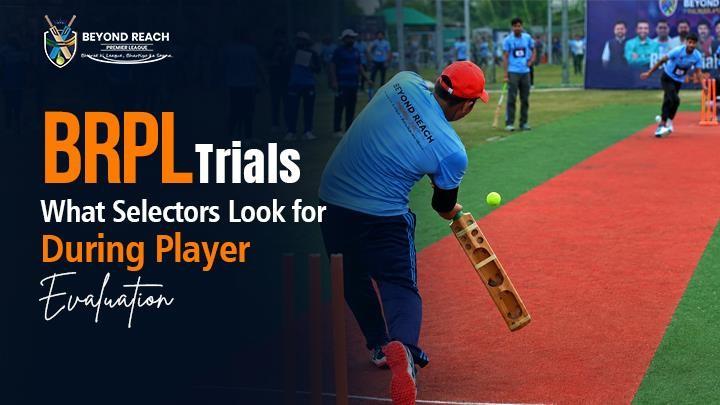
You worked for months, showed up on the day, gave it your all, and then saw someone else walk away with the selection while you were left standing there wondering what had just happened.
If you’ve had that experience, the problem probably wasn’t with your ability. Most of the cricketers who get dropped at trials were quite decent cricketers; they just had no clue what the selector sitting on that chair is actually looking for, because no one really tells them that part.
The cricket selection process feels random when you do not know the rules, but once you understand what selectors are actually looking for, you can walk in with a proper plan instead of just hoping for the best.
Understanding the Selection Mindset
Selectors don’t just sit there waiting for someone to take a wonderful shot and then invite them to a contract. They need someone who has their basics covered, who’s got good posture, and who can plug into a lineup without any grief.
Because they observe many at one time, the one who makes a lasting impression is generally not the most dazzling; it is the one who appears reliable and calm from start to finish.
Technical Skills
Nobody is walking into a trial expecting Virat Kohli. What selectors are actually checking is whether your basics are in the right place or not.
Batting Skills
A selector starts with your stance, grip, and footwork, because those three things immediately tell them whether you have genuinely worked on your game. After that, they watch shot selection, and a batsman who slogs at the wrong time is going to raise a red flag no matter how far it goes.
Bowling Skills
For bowlers, selectors focus on:
- Run-up consistency and a smooth action
- Hitting a good length ball after ball
- Control over line and length across multiple overs
- Variations like a slower ball or disguised googly
They also watch whether a bowler can hold their shape after getting hit. That tells them about mental strength as much as skill.
Fielding Skills
In fielding, they are looking at your reaction time, whether you are picking the ball up cleanly, and whether your throw actually reaches the target. A lot of batsmen lose marks here without realising it, because turning up as a poor fielder tells the selector you have only been working on half your game.
Physical Fitness
Modern cricket asks a lot from your body, and selectors can usually tell within the first 15 minutes whether you have been training or not. In BRPL Trials especially, where matches are competitive and fast-paced, someone who starts fading halfway through is going to be difficult to pick.
Selectors observe:
- How quickly you move between wickets
- Your agility while fielding
- Whether you show signs of fatigue early
- Recovery between overs and repeated high-intensity efforts
You do not need an athlete's physique, but you need to look like someone who trains regularly.
Match Awareness and Game Sense
This is probably the one thing that separates a decent player from a genuinely good one, and most players do not even know selectors are watching for it. Match awareness is defined as whether you are aware of the game when you are playing the game right now.
A batsman who knows when to sit back and when to go forward, a bowler who can read the batsman’s stance, a fielder who is moving in even before the ball is bowled- these are the signals that tell a selector you think about cricket, not just play it.
It mostly comes from playing competitive cricket on a regular basis, and a seasoned selector can understand it in the initial few overs.
Attitude and Discipline
Talent gets you to the trial, but attitude decides whether you make it through. Selectors pay close attention to how you carry yourself when things go against you, because that is when your real character shows.
Selectors also assess how well players follow instructions, respect officials, and maintain discipline throughout the trial.
They want players who remain professional and focused from the beginning of the session until the end. Discipline shows up in small moments too, and selectors notice all of them:
- Arriving on time and being ready before the session begins
- Listening carefully when a coach gives instructions
- Not chatting or losing focus between turns
- Showing the same energy at the end of the trial as at the start
Communication and Teamwork
Selectors assess communication and teamwork because cricket is a team sport, and individual ability alone is not enough to build a strong squad. They look at how comfortably a player works with others, responds to instructions, supports the team, and contributes to a positive playing environment.
A player who communicates clearly, respects teammates, accepts responsibility, and stays involved in team decisions shows selectors that they can be trusted in a competitive squad. These qualities become especially important when players have different roles, experience levels, and playing styles.
Consistency Under Pressure
Every player looks good in the nets, but the selectors want to see if you can unnerve when the match is on the line, and something is really at stake.
The pressure has many forms in a Test, maybe you are bowling to a player who has already dismissed two batsmen, or your side is in urgent need of runs in the dying overs, or you are returning after a poor over.
How you manage in those moments reveals so much more about you than a boundary violation when everything is going well.
How BRPL Conducts Fair and Transparent Trials
Something a lot of players quietly worry about before cricket trials India is whether the process is actually fair, and given how many local selections run on connections and recommendations, that worry makes complete sense.
BRPL Trials work differently. The Beyond Reach Premier League picks players based purely on what happens on the field during the trial, not on backgrounds or connections. All performances are logged and tracked, so the decision is backed by real data, not just someone's opinion.
Players are put through batting, bowling, fielding, and fitness tests and monitored for attitude and awareness of the game, all in a scenario that seems like a real match. Whether you come from a big academy or a small town ground, the same process is for all the players.
Conclusion
A successful cricket trial is about showing selectors that you have the technical ability, game awareness, discipline, and team qualities required to contribute consistently.
Do everything right technically, put the hard work in, know what is going on in the game around you, and turn up with the right attitude that makes other people want you in their team, because that is the mix of qualities the selectors genuinely look for every time they see a trial. Once you understand the cricket selection process properly, you will realise it rewards the right habits far more than raw talent alone.
If you're serious about playing cricket beyond your local ground, BRPL is a platform where that kind of effort actually gets seen.
Frequently Asked Questions
What do cricket selectors observe during trials?
They look at batting, bowling, and fielding basics, fitness levels, game awareness, how you handle pressure, your attitude when things go wrong, and how you interact with teammates.
Do selectors focus only on performance?
Not entirely. Attitude, body language, and how well you connect with the group also play a role, since a team needs more than just individual performers to work.
How important is fitness during trials?
Very important. Poor fitness shows up quickly in how you move, your alertness in the field, and whether you stay switched on all the way through the session.
Can one bad performance affect selection?
One rough moment will not finish your chances, but if your technique keeps breaking down or your attitude drops throughout, that pattern is what selectors will take away.
What makes a player stand out during cricket trials?
Consistent technical skills, fitness, game awareness, discipline, teamwork, and the ability to perform under pressure can help a player stand out during trials.
What qualities do selectors value most during trials?
Selectors value reliable technique, fitness, game awareness, discipline, teamwork, communication, and the ability to stay composed under pressure.