



Tennis Ball vs Leather Ball Cricket – What’s Better for Beginners?
27 April 2026
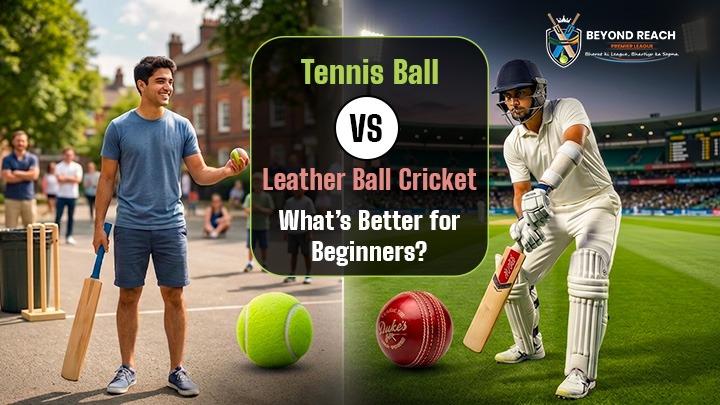
Besides tea, if there’s one thing that Indians are obsessed with, it’s definitely cricket. You can find the passion in many streets, backyards, and playgrounds across the country. Professionally, cricket is played with a leather ball. However, in most gully cricket circles, the matches are played with a tennis ball. While both formats have their own importance, choosing the right starting point can make a big difference in how a player learns and grows.
In this blog, we will compare tennis ball cricket and leather ball cricket to understand which suits beginners best. We will also discuss how platforms like BRPL T10 are creating opportunities for players through their inclusive cricket format.
Difference Between Tennis Ball and Leather Ball Cricket
Before deciding where to start, it is necessary to understand the fundamental differences between the two formats.
Material and Weight
A tennis ball is made with rubber and is layered with a soft felt material, which is lightweight and easy to handle. However, a leather cricket ball is heavier, harder, and made with stitched leather. It is designed for professional play.
Bounce and Speed
Tennis balls typically bounce in a very unpredictable manner. This is especially true when they are used on rough surfaces such as roads or other local areas. In contrast, leather balls have a much more predictable bounce. They also tend to reach higher speeds when used on proper pitches.
Safety Factor
Safety is one of the biggest differences between the two. Tennis ball cricket is far less dangerous, especially for beginners and younger players. There is a high risk of injuries from leather balls if they are not handled properly or used without protective gear.
Skill Level Required
To play cricket with a leather ball successfully, players must possess a greater degree of technique, skills, and physical fitness. On the other hand, tennis ball cricket is easier to pick up, and beginners can learn the basics without pressure.
This is why most players in a tennis ball cricket league in India start their journey with softer balls.
Advantages of Tennis Ball Cricket for Beginners
If you are just starting out in cricket, there are many advantages to playing tennis ball cricket.
Safer for Young Players
Because the ball is softer and lighter, the chances of injury are much lower. This makes them an excellent choice for children and new players who are still developing confidence.
Easier to Play
It is much easier to bat and bowl using a tennis ball than a leather ball. Beginners can easily focus on timing, coordination, and basic techniques without feeling overwhelmed.
Flexible Playing Environment
Tennis ball cricket can be played anywhere, like the streets, parks, terraces, or small grounds. It is very accessible as it does not need professional pitches or costly equipment.
Encourages Participation
Because it is easy to play and widely accessible, tennis ball cricket encourages more people to join. It eliminates obstacles and allows anyone with an interest to participate in the game.
Due to these reasons, tennis ball cricket has become the foundation of cricket culture in India.
Advantages of Leather Ball Cricket
Tennis ball cricket is ideal for beginners, but leather ball cricket also has its own importance.
Real Match Experience
Leather ball cricket closely resembles professional matches. It exposes players to real game conditions like pitch behaviour and match pressure.
Skill Development
By playing with a leather ball, players can develop advanced techniques like swing bowling, seam positioning, and defensive batting skills.
Professional Standard
Look up any professional cricket format, and they all use leather balls. So players who aspire to reach higher levels in cricket ultimately have to adapt to this format.
But beginners may find it difficult to start with a leather ball, especially when they don’t have proper guidance and equipment.
Why BRPL Uses Tennis Ball Cricket
The BRPL cricket league has made a deliberate decision to use the tennis ball format. The reason for this is simple: accessibility and inclusivity.
Accessible to All Players
The majority of aspiring cricketers in India grow up playing with tennis balls. Through this format, BRPL can ensure that players can perform in a familiar setup without big investments.
Grassroots Focus
Being a grassroots cricket league in India, BRPL is designed to reach players in small towns, local communities, and underserved areas. Tennis ball cricket allows wider participation regardless of background.
Encouraging Young Talent
By keeping the format simple and approachable, BRPL will create a space where young players can confidently showcase their talent.
AI-Based Fair Selection
BRPL also integrates technology into the process. Players submit performance videos, and they are screened using AI to ensure unbiased selection. This makes the league fair and transparent.
By integrating tennis ball cricket with modern systems, BRPL is creating a platform that truly represents the future of inclusive cricket.
Which One Should Beginners Choose?
The decision on whether to play tennis ball or leather ball cricket will depend on your experience, level of comfort, and goals.
Here’s a simple comparison:
- Safety: Tennis balls are very safe to play with, while leather balls have moderate to low safety.
- Skill Requirement: Tennis ball cricket is beginner-friendly, while leather ball cricket needs advanced skills.
- Equipment Needed: Tennis ball cricket needs minimal equipment, while the leather counterpart needs a full gear.
- Playing Environment: It is quite flexible in tennis ball cricket, while leather ball cricket needs a professional setup.
- Learning Curve: It is easy for tennis ball cricket, whereas leather ball cricket has a steep learning curve.
Recommendation:
- Beginners and young players should start with tennis ball cricket
- Intermediate players can slowly transition to leather ball cricket
- Aspiring professionals should eventually train with both formats
Tennis format is a good way to establish confidence and fundamental skills before progressing to more challenging setups.
Your First Step Towards Professional Cricket
At the beginning stage of your cricket journey, tennis ball cricket is clearly the better choice. It is safer and more accessible for everyone. It also allows players to learn without pressure. Although leather ball cricket is a crucial component of professional growth, it should be taken up when the basics are strong.
Platforms like BRPL T10 are making this journey even more meaningful by offering real opportunities through an inclusive format. By focusing on grassroots talent and fair selection, BRPL is creating a pathway for players who might otherwise never get noticed.
So if you are just starting, this is the perfect time to take that first step.
Register today with BRPL and start your cricket journey with India’s leading T10 league. Limited slots available!
FAQs
What is the difference between a tennis ball and a leather ball in cricket?
The main difference between the two is that tennis ball cricket uses a much lighter and softer ball. Therefore, playing with it is much safer and easier for an inexperienced cricket player than playing with a hard leather ball.
Is tennis ball cricket safer for new players?
Certainly! It is much safer and can significantly reduce the risk of injury to inexperienced players.
Can beginners play leather ball cricket?
Sure! Beginners can play leather ball cricket. But it is best to start with a tennis ball to improve basic skills and build confidence first.
What type of cricket ball does BRPL use for its league?
BRPL uses a tennis ball cricket format, as it makes it more accessible and inclusive for players in India.
How can I join a tennis ball cricket league in India?
You can register for leagues like BRPL, participate in trials, and get selected based on your performance and evaluation process.