



Mental Preparation Before Cricket Trials
8 September 2026
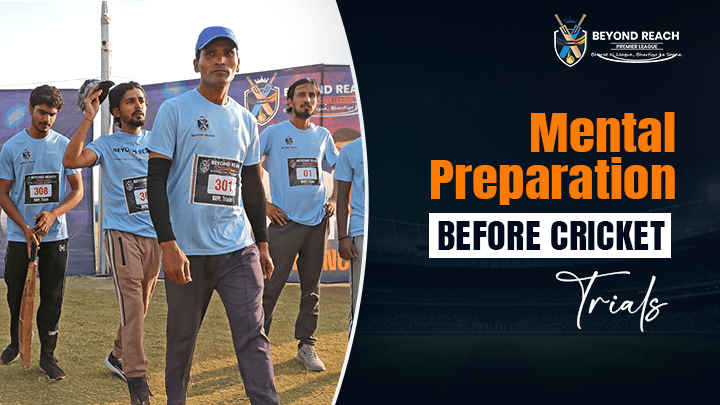
You trained hard, you know your game, and you walk into a trial feeling ready. Then a man with a clipboard sits down on the boundary, and suddenly you cannot find your feet, your mind is somewhere three overs ahead, and the shot you have played a thousand times goes straight to mid-on.
That's not a skill issue. That's a mindset issue, and it is much more prevalent at BRPL Trial try-outs and selection trials all across India than the few players who make it ever talk about. The size, speed, and intensity of what you play in practice vs. what you play when it really matters often comes down to what's running through your brain, not your hands.
What Nobody Tells You Before a Trial
Players spend weeks working on their cover drive, their yorker, their footwork, and almost no time working on the part of their game that takes the most stress on trial day.
Your brain will be more stressed than any other part of your body in those few hours. Walking in unprepared is like walking onto the pitch with no bowling practice at all.
Why Your Mental State Decides More Than Your Skill Level
If you are aiming for a place in a Tennis Ball Cricket League India tournament or going for a BRPL Trial, you don’t get much time to get your mental bearings. In a T10 or in a trial game, the first ball you face can already feel like a pressure ball.
Players who emerge from Grassroots Cricket League India circuits and keep performing have one thing common besides skill: they have been in many-crunch-time games so "being watched" and "assessed" is nothing new for them. They are already playing cricket instead of shortening up to the conditions.
Weeks Before the Trial: What You Should Be Building
A lot of players treat mental preparation like something you just take care of the night before. It doesn’t work. What really builds mental toughness is that you apply pressure on yourself in practice during the weeks leading up to it, intentionally, so your brain has already been through uncomfortable situations.
Here are a few habits worth building:
Visualisation: Walk through your innings or spell ball by ball before the trial.
Pressure net scenarios: Recreate situations such as the last over, two wickets left, or 15 off 3.
Single-focus batting or bowling: Work with one specific goal so your mind has less room to drift.
Reviewing your reactions: After each session, think about when your focus slipped and what triggered it.
You are doing practice anyway. You are just adding a mental layer that most players skip.
On the Morning Itself
Confidence can not be forced the day of a test, and it will do nothing but drain attention once you are there. Do keep in mind to keep the morning routine as close as possible to the normal morning routine.
A few things that help:
Eat something familiar rather than trying new food.
Get to the ground early so nothing feels rushed.
Warm up the same way you do before regular matches.
When nerves show up, focus on one specific technical thing rather than trying to manage the feeling itself.
The goal is not to stop being nervous. It is to not let nervousness take up the mental space you need for cricket.
Give Your Mind a Job Before You Step Out
Most players get stuck in their head because they walk out thinking only about whether they are going to make it. When your brain has nothing to focus on except the outcome, it locks onto the outcome.
Before you go out, pick two things completely within your control:
Moving your feet to every ball.
Keeping your action consistent in the first few overs.
Backing up at the stumps on every delivery.
When your brain has a specific job, the anxiety about making the team moves into the background.
The Skill That Separates the Players Who Get Through
At some point during your trial, something is going to go wrong. How you carry yourself in the 60 seconds after that is probably one of the most important things a selector watches.
A player who takes a breath, gets back into position, and looks the same as before the mistake shows how they may handle a bad session in a real match. A player who walks back with their head down shows something very different.
Players who compete often in Tennis Ball Cricket League India formats tend to handle this better because the games move so fast. You have to move on because the next ball is already there.
If you want to build that same recovery reflex, practise it in the nets. When you make a mistake, take a breath and redirect yourself to one specific focus for the next ball. Over enough sessions, that becomes automatic.
Smaller Town Players Carry Extra Pressure
Something that rarely gets talked about is the extra weight players from non-academy backgrounds carry into a formal trial. When you have spent years watching local selections go the way of connections rather than cricket, walking into a formal evaluation can bring another layer of anxiety.
Grassroots Cricket League India platforms like BRPL are built to remove that layer. When you know the selection is based on your performance, your brain is not splitting its attention between cricket and whatever else might affect the decision.
How BRPL Prepares You Mentally
Players who go through the BRPL Registration process and compete in the league before a major selection trial walk into that trial with something no net session gives you: real experience performing in front of people who are evaluating you.
The specific anxiety of being watched while playing cricket that actually means something is already familiar territory by the time the formal trial comes around.
The process is transparent and merit-based, with matches tracked and performances recorded so decisions come from actual data. Complete your BRPL Registration and step into a space where your preparation gets a fair chance to show up.
Conclusion
Mental preparation before a cricket trial is not a one-day job. It is about the weeks of small habits before the day, practice sessions where you deliberately put yourself under pressure, a familiar morning routine, and clarity about what you are actually there to do.
Put the same effort into your mental side that you put into your batting or bowling, and the gap between your practice performance and your trial performance gets much smaller. BRPL is a place where that preparation gets a fair chance to be seen.
FAQs
How do I mentally prepare for a cricket trial?
Build pressure habits in practice, keep your morning routine familiar, set specific goals, and focus on the next ball rather than what the selector is thinking.
Why do skilled players under perform in trials?
Their attention can shift toward the result instead of the game. Mental preparation helps redirect that focus back to cricket.
How does playing in competitive leagues help mental preparation?
It builds familiarity with performing under observation, so being watched and evaluated does not feel completely new during a formal trial.
Does BRPL help with mental readiness for trials?
Yes. BRPL gives players real match experience in an observed environment, making the pressure of a selection setting more familiar.
What should I do in the 60 seconds after a mistake in a trial?
Take a breath, get back into position, and pick one specific technical thing to focus on before the next ball.
Is mental preparation more important for grassroots players than academy players?
Grassroots players may be entering a formal trial environment for the first time. Mental preparation can help them manage both cricket nerves and doubts about the selection process.