



Cricket Umpire Signals Every Player Should Know
8 October 2026
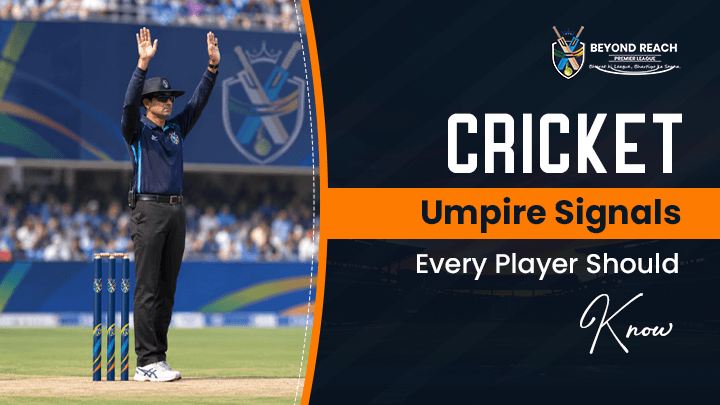
In cricket, batting, bowling, and fielding are the three most essential pillars for the match to happen. But understanding cricket umpire signals correctly is equally important. Ignore one signal, and you’ll have to pay it with runs, a wicket, or maybe a free hit. Knowing them makes you aware and confident on the pitch.
This blog acts as a beginner’s guide to cricket. From basics to all major cricket playing rules, you will learn every key signal be it out, four, six, wide, no ball, bye, leg bye, etc. If you are preparing for trials, this knowledge matters even more. Selectors notice players who read the game well, not just the ones who hit big shots.
What Are Cricket Umpire Signals?
Cricket umpire signals are hand or body gestures that umpires use to show a decision. Four, six, out, wide, no ball, and bye are all shown this way.
Why not just shout or announce? The cricket ground is loud. A signal can be seen from anywhere.
Here is who it helps:
Players, who know what happened and what to do next
Scorers, who write the runs and extras correctly
Coaches, who follow the match from outside
Fans, who understand the game without hearing the umpire
Broadcasters, who explain the decision to people at home
Cricket Umpire Signals every player should know
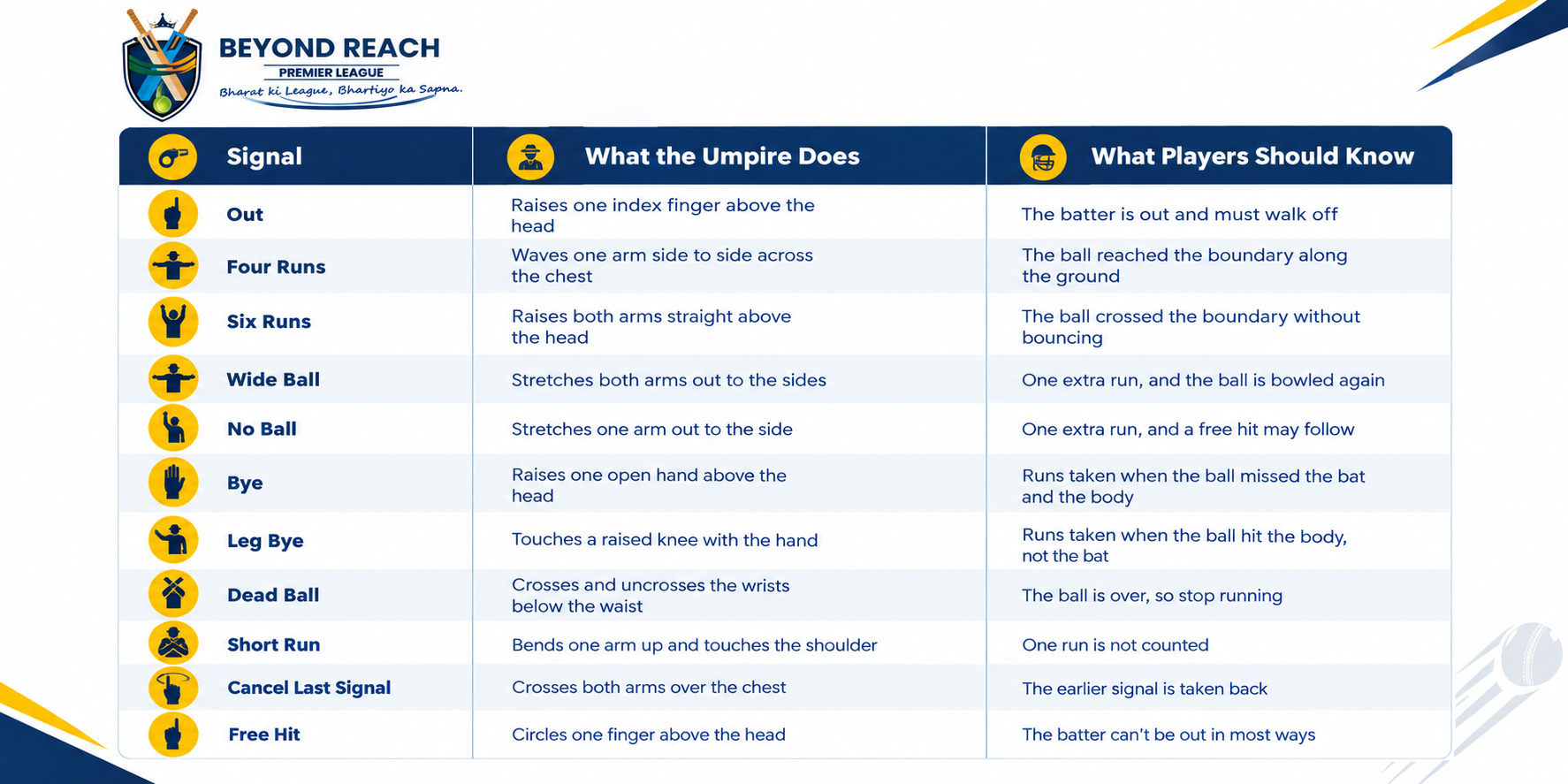
Here is a quick table. Screenshot it or save it on your phone. Details follow below.
Out
The umpire raises one index finger above the head. Every batter knows this one. Spot it right away. Don't stand and stare. Walking off calmly shows you respect the game.
Four Runs
The umpire waves one arm across the chest, side to side. It looks like a small wave. Don't mix it up with six. Four is a wave. Six has both arms going straight up.
Six Runs
Both arms go straight above the head. The ball has crossed the boundary without touching the ground. Honestly, this is everyone's favourite signal.
Wide Ball
The umpire stretches both arms out to the sides. The ball was too wide for the batter to reach. The batting team gets one extra run. The bowler must bowl that ball again. Notice it quickly, because it tells you whether to leave the ball or play at it.
No Ball
One arm is stretched out to the side. It can happen if the bowler steps over the line, or if the ball reaches the batter above waist height without bouncing. It's an important rule for bowlers. A no ball gives away an extra run and an extra delivery.
Bye
The umpire raises one open hand above the head. The ball went past the batter, touching neither the bat nor the body. The batters still ran and took runs.
Leg Bye
The umpire touches a raised knee with the hand. The ball hit the batter's body, not the bat, and the batters took runs. There is one catch. Leg byes count only if the batter tried to hit the ball or tried to get out of its way.
Dead Ball
The umpire crosses and uncrosses the wrists below the waist. The ball is no longer in play. Wait for this signal before you relax. Many beginners start celebrating or running too early.
Short Run
The umpire bends one arm up and touches the shoulder with the fingers. It means a batter didn't reach the crease properly, so that run is cancelled. The lesson is simple. Always reach your crease fully.
Cancel the Last Signal
The umpire crosses both arms over the chest, touching each shoulder. This takes back the earlier signal. For example, the umpire may have signalled a boundary by mistake.
Free Hit
The umpire circles one finger above the head. This usually comes after a no ball. On a free hit, the batter can't be out in most ways. A run out is one exception. So it's a good chance to swing hard.
Why Umpire Signals Matter for Aspiring Cricketers
Let's talk about why this helps you as a player.
Better Understanding of the Game
Umpire signals are part of cricket basics and cricket rules. When you know them, you see the full game, not only your own role.
Faster Decisions on the Field
You spot a wide, no ball or a boundary at once. Fielders get ready sooner. Batters plan better.
Better Match Awareness
Competitive cricket needs you to notice what's happening around you. Signals are an easy way to build that habit.
More Confidence in Trials and Matches
Trials are stressful already. When you know how a match works, you worry less about small things and focus on your game.
Small Details Make a Big Difference
Talent matters, of course. But discipline and game sense matter too. Coaches and selectors notice these things, even if they don't say it.
That is the thinking behind BRPL too. Players should be judged on skill and potential, not on background or connections.
How To Learn Cricket Umpire Signals Quickly
You don't need a big book. Try these five steps.
Start with the common ones. Learn out, four, six, wide and no ball first. You will see them in almost every match.
Watch the umpire while watching cricket. Don't follow only the ball. See what the umpire does right after each delivery.
Practise the signals yourself. Try them in front of a mirror or with friends. When your body remembers the move, your mind remembers the meaning.
Learn the rule behind each signal. When you know why the signal is given, you don't have to memorise it.
Play more matches. Local games and competitive games build real game sense.
Understand the Game. Prepare for Your Opportunity With BRPL
Knowing the game is one part of the journey. Getting a real chance to show your skills is the other part.
BRPL (Beyond Reach Premier League) is a grassroots T10 tennis ball cricket platform. It focuses on:
Talent discovery
Structured player evaluation
Competitive exposure
Regional representation
The idea is simple. You shouldn't need money, connections or a cricketing "godfather" to get noticed. Your skill and potential should be enough for a fair look.
Here is how the pathway works:
City Trials
Match Trials
Final Shortlisting
Player Auction
Zonal Representation
League Participation
Trials are held across 22 cities in India. To complete your BRPL Registration, visit the official BRPL website, choose your trial city and role, and fill in the details.
Frequently Asked Questions
What are the most important cricket umpire signals for beginners?
Start with out, four, six, wide, and no ball. You will see these in almost every match. After that, learn bye, leg bye, dead ball, and free hit.
How does an umpire signal a wide ball?
The umpire stretches both arms out to the sides. The batting team gets one extra run, and the ball is bowled again.
What is the signal for a no ball in cricket?
The umpire stretches one arm out to the side. The batting team gets an extra run, and the next ball may be a free hit.
What is the difference between a bye and a leg bye?
In a bye, the ball misses both the bat and the body. In a leg bye, it hits the body but not the bat. The signals are different too. A bye is an open hand raised high, and a leg bye is a touch on the knee.
Why do cricket umpires use hand signals?
Cricket grounds are big and loud. Signals let players, scorers and fans see the decision from anywhere.
How can beginners learn cricket umpire signals?
Start with the five common ones. Watch live matches and keep an eye on the umpire. Then practise the signals at home or with friends.