



Cricket Rules Every Player Should Know: A Beginner's Guide to Cricket
31 July 2026
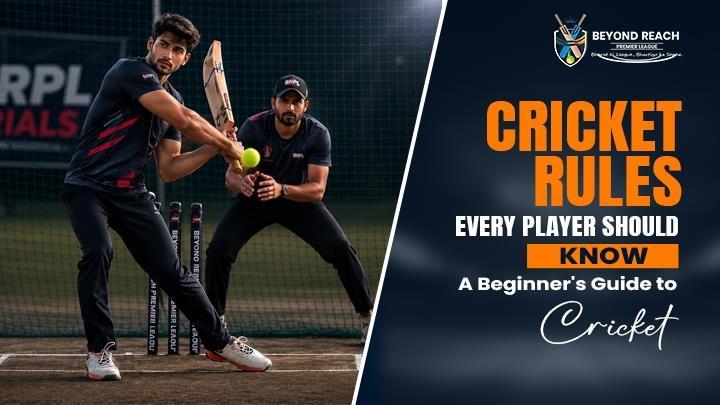
Ever sat through a cricket match with your dad or a friend, watched everyone erupt in applause, and had absolutely no idea what just happened? Yeah, most of us have been there. Cricket has a reputation for being confusing, and honestly, the reputation is fair. It moves slower than football or basketball, it has its own vocabulary, and a lot is happening in the background that isn't obvious to a first-time viewer.
But here's the thing. Once you get the basics, cricket stops feeling like a mystery and starts feeling like one of the smartest games out there. This guide is meant to walk you through cricket rules for beginners, the way a friend would explain it over chai, not the way a textbook would.
Learning the basics becomes even more exciting when you can put them into practice. Whether you're playing with friends or joining an organized tournament, understanding the rules gives you more confidence on the field.
So What Exactly Is Cricket?
Cricket's played between two teams of eleven. One side bats, trying to score runs. The other bowls and fields, trying to stop them and get them out. Simple idea, though it gets a lot more layered once you're actually watching.
The action all happens on a strip in the middle of the field called the pitch, 22 yards long. At each end stand three wooden stumps, the wickets, and honestly most of what happens in a match comes down to someone attacking or defending those stumps.
Getting to Know the Field
Before we get into the actual cricket playing rules, it helps to picture the layout. The pitch sits in the center of the ground, and everything outside it is called the outfield. Fielders are scattered around this outfield, and where they stand isn't random. It depends on the bowler's plan, the batter's habits, and honestly, sometimes just gut feeling from the captain.
There are two batters on the field at any one time, on opposite sides of the pitch. But only one of these batters is facing the bowler at a time. The bowler runs in and bowls trying to either knock the stumps over or get the batter to mess up. Behind the batter is the wicketkeeper, the only fielder permitted to wear big gloves and pads, ready for the ball that may slip past the bat.
The 5 Ways a Batter Gets Out: Cricket Rules for Beginners
Honestly, this is where most newcomers get lost, so let's slow down and break it apart.
Bowled is the simplest one to spot. The ball just crashes into the stumps and knocks the bails off. No debate, no drama, just out.
Caught is almost as clean. The batter gets a touch on the ball, and a fielder scoops it out of the air before it hits the ground.
LBW, or leg before wicket, is the one that confuses new fans the most, and really, this rule alone accounts for half of any decent cricket rules for beginner's guide. If the ball hits the batter’s leg or body rather than the bat, and the umpire judges that it would have hit the stumps, then it is out. It's a judgement call rather than an exact science which is precisely why it causes more arguments than any other rule in the game.
Run out happens when a batter gets caught outside their crease mid run, and a fielder breaks the stumps with the ball before they can scramble back to safety.
Stumped is the wicketkeeper's version of the same idea. The batter steps out to take a swing, misses, and the keeper whips the bails off before they can get back in time.
There are a few rarer dismissals too, but these five cover almost everything you'll actually see happen in a real match.
Why the Format You're Watching Actually Matters
Something a lot of beginners don't realize right away is that cricket isn't played the same way every time. There are three main formats, and each one changes the entire feel of the game.
Test cricket is the oldest and by far the longest, stretched out over five days with no cap on overs. It rewards patience more than anything else, and a lot of longtime fans will tell you this is the real test of a player's skill, hence the name.
One Day Internationals cap each team at 50 overs, which means the whole match wraps up in a single day.
T20 cricket is the shortest and by far the fastest. Just 20 overs a side. Honestly, this format is why cricket has exploded in popularity worldwide in the last decade or so. Leagues like the Indian Premier League have made it must-watch entertainment and it is often the first real taste people get of cricket rules in India, especially younger fans who grew up with shorter attention spans and faster games.
The Over: Cricket's Basic Building Block
An over is just six legal balls bowled by one bowler from one end. Once those six are done, a different bowler takes over from the other end. This keeps rotating throughout the innings, and no bowler is allowed to bowl two overs back to back.
The Toss and How Innings Work
Every match starts the same way, with a coin toss. Win it, and your captain gets to pick whether you bat or bowl first, a call that usually hinges on pitch conditions, the weather, or sometimes nothing more than gut instinct. In limited overs cricket, each side gets one shot at batting and one shot at bowling. Test cricket is played by different cricket rules, teams can bat twice if the situation calls for it.
Whoever bats second is chasing a number. That's it, that's the job. Chase it before the overs run out, and you win. Fall short, and you're the team walking off with your head down.
Then there's the rare case where both teams end up with the same score, and the match ends in a tie. It barely ever happens, but when it does, it's the kind of finish people bring up in conversations for years afterward.
A Few More Rules Worth Knowing
Besides scoring and getting out, a handful of other basic cricket rules dictate how a game goes.
When a bowler bowls a ball, he has to keep his arm straight. Bending the elbow in mid-release is illegal, called a throw, and it's a no-ball.
Fielders can't deliberately get in a batter's way while they're running, and there are pretty strict rules around field placements during certain overs to keep things fair for the batting side too.
Powerplays, which show up a lot in limited-overs cricket, limit how many fielders can stand outside a certain circle during specific overs. This usually works in the batting team's favor early in the innings, which is exactly why you'll see a flurry of boundaries at the start of most matches.
Why Learning Cricket Rules for Beginners Is Worth It
Knowing the rules is only part of becoming a better player. The best way to build confidence is by playing real matches where you can apply what you've learned. The BRPL Cricket League gives working professionals, students, and cricket enthusiasts a chance to experience organized tennis ball cricket in a competitive yet enjoyable environment. Once you're comfortable with the basics, completing your registration for BRPL lets you take your game beyond casual weekend matches.
Conclusion
Cricket may seem complicated at first, but once you understand the basics, it becomes an exciting and strategic sport. Whether you're picking up a bat for the first time or looking to improve your understanding of the game, these cricket rules for beginners will help you enjoy every match with confidence.
And when you're ready to put those rules into practice, the BRPL Cricket League offers the perfect opportunity to experience competitive tennis ball cricket. Complete your BRPL Registration, step onto the field, and discover how much more enjoyable the game becomes when you know the rules.
Frequently Asked Questions
What are the basic cricket game rules?
Two teams of eleven play, one batting to score runs while the other bowls and fields to get them out. Whoever scores more within the overs allowed wins the match.
Who created the laws of cricket?
The laws of cricket are maintained by the Marylebone Cricket Club (MCC) in London, the official custodian of the sport's rules since the 1700s.
How many overs are there in a T20 match?
Each team gets 20 overs to bat, which usually wraps the whole match up in around three hours, making it the quickest and most popular format today.
What's a good way to learn cricket basics quickly?
Start by watching a T20 match, it's short, fast-paced, and covers most of the fundamentals like scoring, overs, and dismissals in about three hours.
What is the easiest way to get out in cricket?
Getting bowled is the simplest dismissal to understand, the ball just hits the stumps directly and knocks the bails off.