



Cricket Fielding Positions Explained: A Complete Guide For Beginners
8 October 2026
All of us fall in love with cricket through either batting or bowling. But fielding? That is where matches are quietly won and lost. One sharp catch at slip or one direct hit from the deep can change the mood of a game in seconds. Beginners keep hearing words like slip, gully, cover, mid-off, square leg, and fine leg, and honestly, it all sounds confusing at first.
Once you know where each fielder stands and why, you read the game better, position yourself smartly and talk to teammates with confidence. It also matters a lot in Cricket Trials India, where selectors watch your fielding as closely as your batting.
What Are Fielding Positions in Cricket?
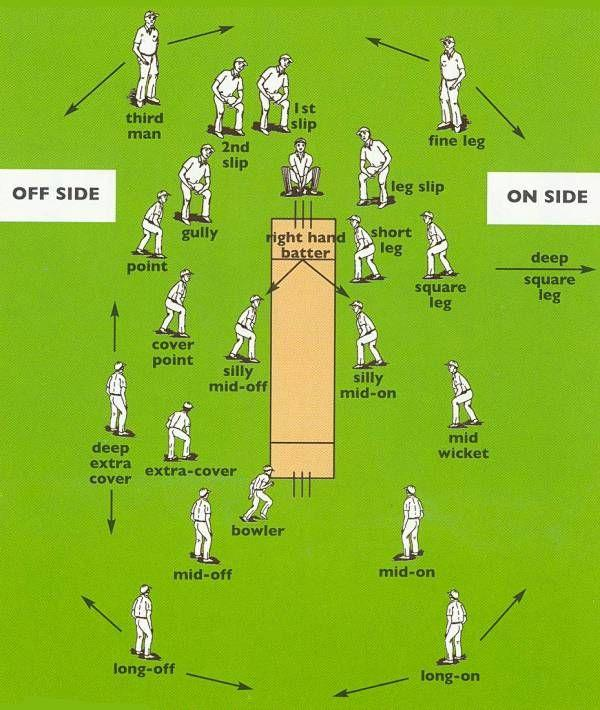
A fielding position is the spot where a fielder stands to stop runs, take catches, or create run-out chances. Captains choose these spots based on:
The bowler's type (pace or spin)
The batter's strong shots
The match situation and format
The overall plan
And here is the thing, positions can change after every ball.
Off Side vs Leg Side In Cricket
Imagine the batter in their stance. The side their chest faces is the off side. The other side, behind their body, is the leg side (also called the on side).
Particulars | Right-hand batter | Left-hand batter |
Off side | Batter's right | Batter's left |
Leg side | Batter's left | Batter's right |
Learn this first. Every position name makes more sense once you know which side of the pitch you are talking about.
Cricket Fielding Positions Explained
Slip
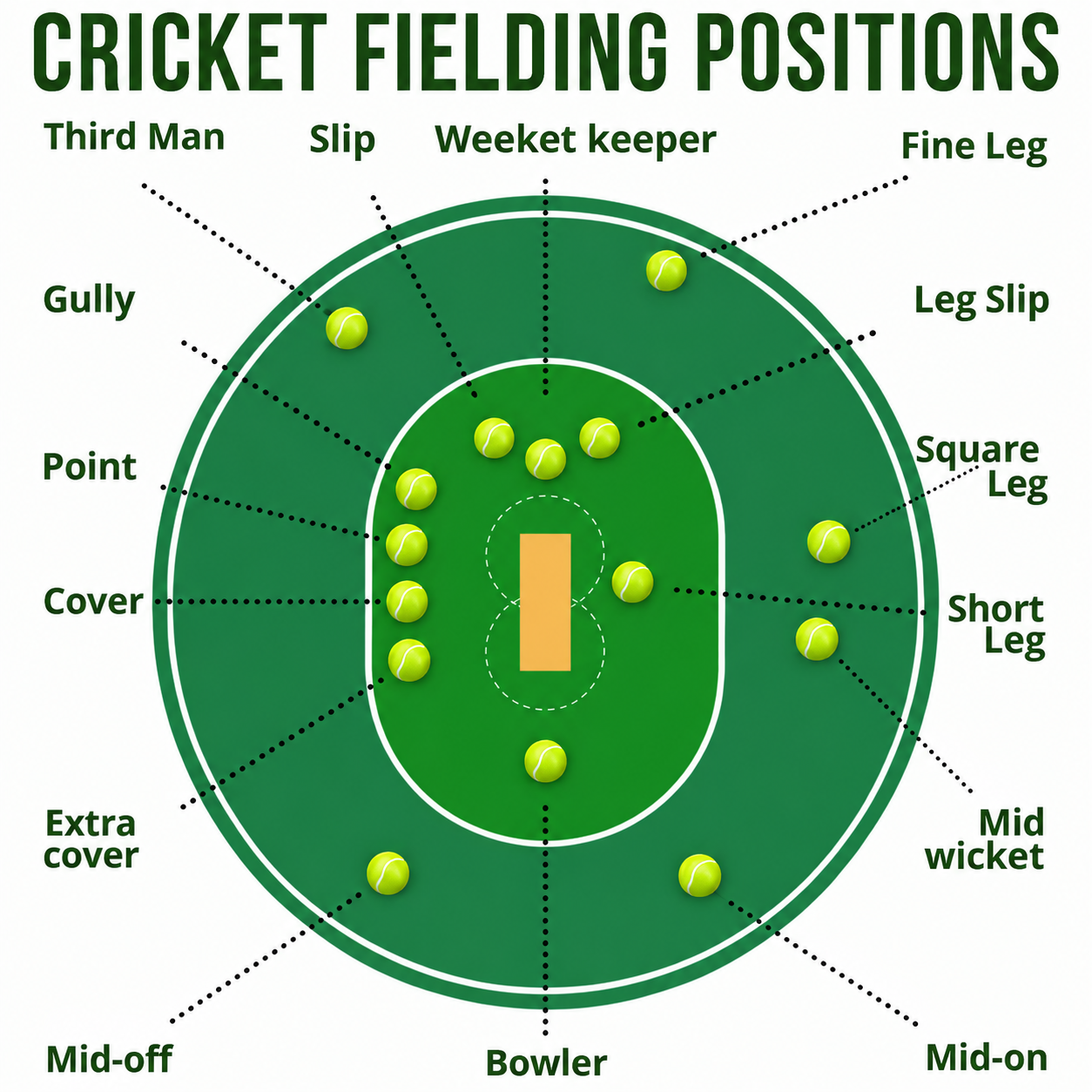
Slips stand right behind the batter on the off side, in a line beside the wicketkeeper. Their job is to catch the small edges (thin touches from the bat). You need quick reflexes and soft hands. Slips are mostly used against fast bowlers.
Gully
Gully stands a little wider than the slips, between slip and point. It is an attacking position for edges and hard cuts. Fielders here need fast hands and a fearless attitude.
Point
The point stands square of the wicket on the off side, fairly close to the bat. It stops square cuts and sharp singles. Agility and a flat, accurate throw matter most here.
Cover and Extra Cover
The cover stands in front of the square on the off side. The extra cover sits a bit wider, between cover and mid off. Both stop drives and save singles, so anticipation is a must.
Mid Off
Mid off stands on the off side, close to the bowler's straight line. It stops straight and off side drives and often helps the bowler by cutting easy singles. Good calling and a strong arm help.
Mid On
Mid on is the leg side partner of mid off. It handles straight drives and shots pushed towards the on side. Quick movement and a sharp throw to the bowler's end are key.
Square Leg
Square leg stands level with the batter on the leg side. It handles flicks and sweeps played square. Its exact spot changes with the bowler's angle.
Mid Wicket
Mid wicket sits between mid-on and square leg. Pulls, flicks and firm leg side shots come here, so reading the batter's body early helps a lot.
Fine Leg
The fine leg is behind square on the leg side and saves boundaries from glances and deflections. In shorter formats it is often a boundary spot too.
Third Man
The third man stands behind the wicket on the off side. It covers edges and late cuts, so speed and boundary awareness matter.
Long On and Long Off
These are boundary positions straight down the ground. They stop sixes and fours, and they need one thing above all: judging the ball in the air while the crowd is shouting. Catching under pressure is the real test.
Deep Square Leg and Deep Mid Wicket
Captains use these to protect the leg side boundary against pulls and slog sweeps. Both need a good catch and a long, accurate throw.
How Do Captains Decide Fielding Positions?
Captains match fielders to the bowler, the batter and the match situation. They look at the batter's favourite scoring areas, overs left, the required run rate, fielding restrictions and, importantly, who is a safe catcher and who has the strongest arm.
Particulars | Pace bowling | Spin bowling |
Common close fielders | Slips, gully, short leg | Slip, silly point, short leg |
Common boundary spots | Third man, fine leg | Long on, long off, deep mid wicket |
Main idea | Catch edges, cut off drives | Force mistakes, protect big hits |
Attacking vs Defensive Field Settings
Attacking field: more close catchers, built to take wickets and build pressure.
Defensive field: more fielders on the boundary, built to stop runs when the batter is set.
What Skills Do You Need To Become A Good Fielder?
You do not need a fancy gym. You need habits. So, work on:
Catching (high catches and low catches)
Throwing accuracy
Speed and agility
Reaction time
Ground fielding and anticipation
Talking to teammates
Concentration and fitness
Staying calm under pressure
Can A Good Fielder Stand Out During Cricket Trials?
Yes, and many players miss this. Batting and bowling are the loud skills, but fielding quietly shows your athleticism, discipline and game sense. In Cricket Trials India, evaluators often watch how you move, dive, call and throw. A player with an average score who fields brilliantly can still leave a strong impression.
Why Fielding Matters in Modern Cricket
Today's game is fast and athletic. A strong fielding unit saves runs, creates run outs, takes tough catches and builds pressure on batters, and that can change the momentum of a whole match. So aspiring players should aim to be complete cricketers, not one skill wonders. Batting, bowling and fielding - all three, together.
How Can Aspiring Cricketers Get More Competitive Exposure In India?
Talent is everywhere in India, but access is not. Many players struggle with:
Limited access to recognised opportunities
No cricketing connections
Financial limitations
Little exposure beyond local grounds
No way to be evaluated outside their own circle
This is why a Grassroots Cricket League India pathway can help. A structured route usually looks like this: registration, trials, player evaluation, match exposure, selection and then league cricket. No pathway can promise selection or professional success, but a fair, visible process gives you a real chance to be seen.
BRPL: A Structured Opportunity for Aspiring Cricketers
BRPL (Beyond Reach Premier League) is a grassroots T10 tennis ball cricket platform built around talent discovery, structured player evaluation, competitive exposure and regional representation. It is meant for players who are good enough but never got the right stage.
How the BRPL Player Journey Works
Registration: Complete BRPL Registration with your player details.
City Trials: Take part in trials across multiple cities.
Match Trials: Selected players move to match based evaluation, where every BRPL Trial checks skills in real game situations.
Final Shortlisting: Players are assessed for potential selection.
Player Auction: Shortlisted players enter the auction for zonal representation.
League Participation: Players selected through this process get to play in the BRPL League.
If you have the passion and the skills, don't wait for a lucky break. Complete your BRPL Registration today and take your first step towards structured trials, fair evaluation, and real match exposure.
Frequently Asked Questions
What are the main fielding positions in cricket?
Slip, gully, point, cover, extra cover, mid off, mid on, square leg, mid wicket, fine leg, third man, long on, long off, deep square leg and deep mid wicket.
Which is the easiest fielding position for a beginner?
There is no single easiest spot. It depends on your speed, catching ability and game awareness. Many coaches start beginners at mid on or mid off to build basics.
What is the difference between mid on and mid off?
Both stand near the bowler. Mid off is on the off side and mid on is on the leg side.
What is the difference between cover and point?
Point is the square of the wicket and handles cuts. The cover is in front of the square and handles drives.
Which fielding position is best for fast players?
Point, cover, square leg and the boundary spots suit quick players, but the captain's plan and your skills decide the final spot.
How can I participate in cricket trials in India?
Look for structured trials run by leagues and academies. BRPL Registration is one route for aspiring players.
Does BRPL conduct cricket trials in India?
Yes. BRPL holds city trials across 22 cities, followed by match trials and shortlisting.
Do I have to leave my current team to join BRPL?
No. There is no exclusive player contract, so you can continue with other tournaments and clubs.